
Priya Shah, Staff Writer.
It is 7:40 on a Tuesday, the shower is not happening, and the can on the bathroom shelf gets one more chance. Most people spray it the same way they always have: close to the scalp, all over, right before they walk out the door, and wonder why their part still looks flat by lunch. The truth is that dry shampoo is a genuinely useful tool that almost nobody uses correctly. It does not clean hair. It absorbs oil, and how well it does that depends less on the can and more on where you spray it, when you spray it, and what you do with your hands and a brush afterward. Get those three things right and the same drugstore bottle you already own can buy you an extra day, sometimes two.
- Timing matters more than product: applying dry shampoo the night before, rather than the morning of, gives the starch time to fully absorb oil instead of just sitting on top of it.
- Distance and distribution beat quantity: holding the can roughly six inches from the scalp and sectioning hair prevents the white cast and product buildup that come from spraying too close or too heavily.
- Brushing it out is not optional: massaging the product into the scalp and brushing from root to end is what actually removes oil and residue, not the spray itself.
Why Dry Shampoo Works On Oil, Not Dirt
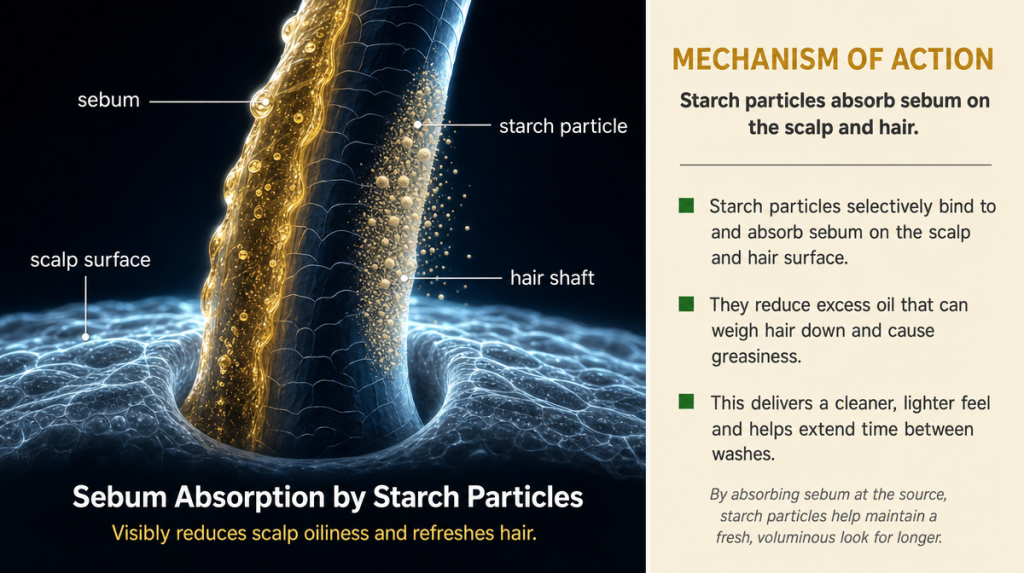
Dry shampoo is not a substitute for washing. It is a powder, usually rice starch, cornstarch, or a clay or silica compound, designed to absorb sebum, the oil your scalp produces naturally. Think of it the way you would think of blotting paper on an oily forehead: it soaks up shine, but it does not remove what is underneath. Sweat, styling product residue, and everyday grime stay put.
That distinction matters because it changes what a reasonable person should expect. A treatment can make hair look and feel clean for a day or two by managing oil at the root, but it cannot replace the mechanical and chemical cleaning that shampoo and water actually do. Used correctly, it delays a wash. Used as a permanent stand-in, it tends to leave a dulling residue over time.
The Six-inch Rule Most People Ignore

The single most common mistake is holding the can too close to the head and spraying in one continuous pass. That deposits far more powder than the scalp needs in one spot, which is exactly what produces the chalky, gray-white cast that makes people give up on the product entirely.
The better method: hold the can about six inches from the scalp, part hair into two-inch sections, and spray in short bursts directly at the roots rather than down the length of the hair. Move the can as you spray instead of holding it still over one area. Work from front to back so you can see where product has already landed.
A light, even layer absorbs oil just as well as a heavy one, and it disappears into the hair instead of sitting on top of it. If you can see the powder after a minute, you used too much.
Why Timing Beats Quantity
Most people reach for dry shampoo in the ten minutes before they leave the house, which is close to the worst possible window. Starch and clay particles need time, often a few hours, to fully draw oil away from the scalp and hair shaft. Sprayed on damp skin under time pressure, they mostly just sit there.
Applying it the night before, after the scalp has had a full day to produce its usual oil, gives the product time to work while you sleep. In the morning, a quick brush-through finishes the job and the hair looks less like it was treated and more like it simply is not oily.
One dermatologist who studies scalp health put it plainly.
“The product needs contact time to do its job. Spraying it on and walking out the door thirty seconds later is asking a sponge to absorb a spill it hasn’t touched yet.” – Dr. Claire Dubois, MD, board-certified dermatologist
Brushing It In: The Step People Skip
Spraying is only half the process. After application, massage the product into the scalp with your fingertips for about thirty seconds, the way you would work in a leave-in conditioner. This helps distribute the powder evenly and breaks up any concentrated patches before they can turn chalky.
Then brush, starting at the roots and working toward the ends, ideally with a natural bristle brush, which tends to redistribute oil and product more effectively than plastic paddle brushes. This step is what actually removes visible residue and leftover oil rather than just hiding it under powder.
A simple self-test: run two fingers along your part line right at the scalp. If you feel any grit or see white flecks on your fingertips, you need another round of brushing, not another round of spraying.
Root Lift Versus All-over Refresh
Not every section of the head gets oily at the same rate. The crown and the hairline near the temples tend to produce more sebum than the ends, which is why an all-over spray is often unnecessary and sometimes counterproductive.
On a genuine second-day, focus the spray narrowly at the roots along the part and at the crown. By the third or fourth day, especially for people with finer hair, oil migrates further and the temples and hairline may need attention as well. Treat it the way you would treat an oily T-zone on the face: target the areas that actually need blotting rather than covering the whole surface out of habit.
This targeted approach also uses less product overall, which means less buildup to brush out later and a lighter feel by the end of the day.
Matching Formula To Hair Color And Avoiding The Gray Cast
Untinted dry shampoo powders are formulated to be close to invisible on lighter hair, which is exactly why they can leave a visible film on medium, tan, or deep shades. Many brands now sell tinted versions built for a range of hair colors, and choosing one that is closer to your own shade meaningfully reduces the cast problem, more than technique alone can fix.
Before committing to a full application, do a small test: spray a light amount onto a section near the back of the head, rub it in with your fingers, and check it against the rest of your hair in daylight rather than bathroom lighting, which tends to wash out color differences. If it reads chalky in daylight, it will read chalky at your desk.
This is a case where the product itself matters more than the method. No amount of careful spraying corrects a formula that was never made for your hair color.
How Long A Treatment Should Last, And When To Actually Wash
Climate changes the math here more than most people realize. Humid summer days on the East Coast tend to accelerate oil production and can make a morning application feel spent by early afternoon. Dry winter air combined with indoor heating pulls moisture from the scalp in a different way, which can paradoxically extend the time between washes for some people while making others’ scalps flakier and more sensitive to product buildup.
As a general guide, most people can reasonably stretch a wash by one to two days using the techniques above, though results vary by hair type, activity level, and scalp oil production. Overusing dry shampoo as a long-term replacement for washing, rather than an occasional bridge, has been associated in dermatology practice with scalp irritation and follicle congestion.
“A day or two of extension between washes is reasonable for most people. When it becomes the primary way someone manages their hair, the scalp often starts to show it, with irritation, odor, or visible flaking.” – Professor Margareta Lindberg, MD, PhD, Dermatologist and researcher
What Is Marketing And What Is Mechanism
Added fragrance, coloring agents, and botanical extracts on the label make a product more pleasant to use, but they are not what absorbs oil. That job belongs to the base ingredient, typically a starch, a clay such as kaolin, or a silica compound, and it is worth knowing which one your product uses.
Volumizing claims usually come from the same mechanism working in your favor: less oil weighing down the roots naturally reads as more lift. It is not a separate additive doing extra work. Marketing language like detoxifying or clarifying on a dry shampoo can label is largely stylistic, since the product is not cleansing in the way water and surfactants do.
Reading the ingredient list for the actual absorbing agent, rather than the front-of-bottle claims, is the fastest way to compare products honestly.
Key Takeaways
Dry shampoo absorbs oil rather than cleaning hair, so its performance depends heavily on how it is applied. Spraying from about six inches away, in sections, and at night rather than in the morning rush gives the powder time to actually do its job. Brushing it through afterward, not just spraying and leaving, is what removes both the oil and the product itself. Matching the formula to your hair color reduces the cast problem that technique alone cannot fix, and climate, particularly humid summers and dry winter heating, changes how often a treatment is realistically needed.
A Quick Checklist Before Your Next Application
- Apply the night before when possible, not minutes before you leave
- Hold the can about six inches from the scalp and section your hair
- Target the crown and part first, adding temples only as needed
- Massage into the scalp, then brush root to end with a natural bristle brush
- Check the ingredient list for the actual oil-absorbing agent, not just the marketing claims
- Choose a tinted formula if you have medium to deep hair to avoid a visible cast
- Treat it as a bridge between washes, not a long-term replacement for washing
Sources
1. American Academy of Dermatology, public patient guidance on hair and scalp care, 2023
2. Mayo Clinic, patient education materials on hair care basics, 2022
3. Journal of Cosmetic Science, research on sebum absorption by powder-based formulations, 2015
4. U.S. Food and Drug Administration, cosmetic labeling and aerosol product guidance
Professor Margareta Lindberg, MD, PhD: Dermatologist and researcher with extensive experience studying skin aging, barrier function, and connective tissue, including clinical research and collaborations involving topical skincare formulations.
Dr. James Morrison, PhD: Biochemist with a research background in dermal delivery and formulation science, focused on how topical ingredients interact with and penetrate the skin barrier.
Dr. Claire Dubois, MD: Board-certified dermatologist with experience in cosmetic dermatology and clinical research, with interests in skin aging, pigmentation, and non-invasive aesthetic treatments.
This article is for general information and does not replace personal medical or dermatological advice.
Individual results vary depending on hair type, scalp condition, and climate.